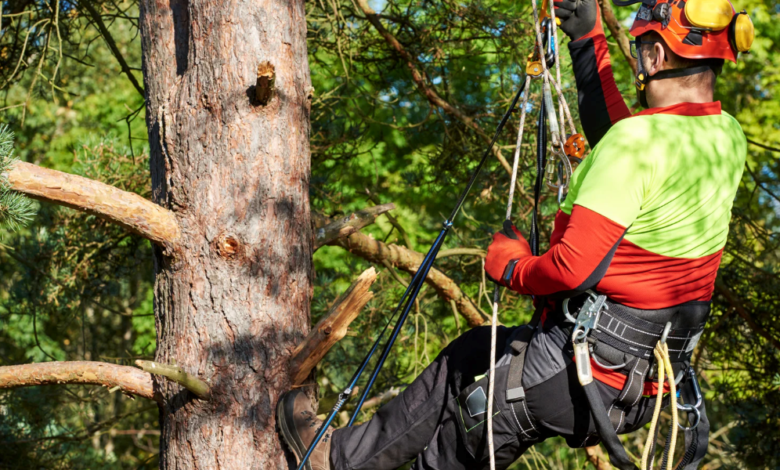
Tree health can be deceptive. A tree may appear strong and stable from the outside while hiding decay, disease, or structural weaknesses within. That’s why hiring an experienced arborist in Alpharetta is critical when it comes to evaluating trees, especially in areas exposed to storms, heavy winds, or aging vegetation. These professionals are trained to detect hidden threats before they become safety hazards. Relying on appearances alone can result in unexpected damage, property risk, or costly removals that could have been avoided with early intervention.
What Makes Tree Issues “Invisible”?
Invisible tree issues are those that aren’t immediately noticeable to an untrained eye. These include internal rot, cracked limbs concealed by foliage, fungal infections under bark, and root problems beneath the surface. Over time, these silent issues weaken the tree’s structure, increasing the risk of failure during storms or even under normal conditions.
Common indicators like slight leaning, reduced foliage density, or early leaf drop can be easy to miss without a professional inspection. Certified arborists know exactly where to look and what subtle changes indicate deeper problems.


See also: How Custom Home Builders Use Space Optimization for Modern Living Needs
Why Certification Matters
Not all tree care providers are equally qualified. Certified arborists go through rigorous training and must pass credentialing exams to earn recognition from industry organizations. Their certification demonstrates a deep understanding of tree biology, proper pruning techniques, soil health, and hazard identification.
Their evaluations are rooted in science and backed by industry standards, not guesswork. That’s what sets them apart and makes them indispensable when it comes to spotting hidden or developing tree health problems.
Understanding how arborists protect trees during storms offers insight into their broader value. Preventative measures like cabling, structural pruning, and load reduction are often based on early detection of weakness, something only a certified professional can confidently assess.
Regular Inspections Save Trees and Property
Routine inspections by certified arborists help extend the lifespan of your trees. They don’t just address current problems; they anticipate future ones. Early diagnosis allows for strategic interventions, such as correcting soil deficiencies, reducing branch weight, or supporting limbs that may be vulnerable. Without these inspections, homeowners may only discover issues once a branch falls or a tree begins to lean, by which point options may be limited to removal.
When to Call an Arborist
While annual inspections are recommended for most properties, certain signs demand immediate professional evaluation. These include visible fungal growth, bark cracks, hollow trunks, or sudden leaf discoloration. Additionally, after storms or periods of drought, trees can become unstable even if no external damage is evident.
A certified arborist is equipped to assess structural integrity, root health, pest activity, and the tree’s overall stability. They also provide clear recommendations based on severity and potential risk, helping you take action confidently.
Conclusion
Trees are valuable assets to your property, but only when they are healthy and safe. The expertise of a certified arborist is essential in identifying hidden threats that can lead to major damage if left unchecked. From internal decay to structural instability, these professionals bring a level of insight that protects both your trees and your property. Investing in regular inspections by a qualified arborist ensures the long-term health, safety, and beauty of your landscape.