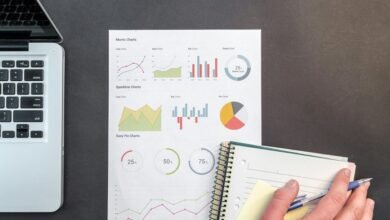
Strategic Planning and Business Growth Metrics: 786633794, 213260100, 685788842, 2175226211, 21037400, 911318220


Strategic planning is essential for businesses aiming to enhance their growth metrics. Key figures such as 786633794 and 213260100 serve as indicators of performance and market positioning. By examining these metrics, organizations can identify trends and make data-informed decisions. This analytical approach not only drives operational efficiency but also prepares companies for dynamic market challenges. However, the implications of such data extend beyond mere numbers, raising critical questions about future strategies and competitive advantage.
The Role of Strategic Planning in Business Growth
A well-structured strategic planning process serves as a cornerstone for sustainable business growth.
By ensuring strategic alignment among various departments, organizations can effectively leverage resources and expertise.


Growth forecasting, a vital component of this planning, enables businesses to anticipate market trends and make informed decisions.
Together, these elements create a roadmap that fosters adaptability and resilience in an ever-changing economic landscape.
Understanding Key Business Growth Metrics
Metrics serve as vital indicators of business growth, providing quantifiable data that organizations can analyze to gauge their performance.
Key metrics include growth rate, which reflects overall expansion, and revenue streams that diversify income.
Market penetration measures competitive positioning, while customer retention indicates loyalty.
Profit margins highlight financial health, and competitive analysis informs strategic decisions, ensuring businesses navigate their environments effectively.
Analyzing the Impact of Metrics on Decision Making
Effective decision-making in businesses increasingly relies on the analysis of growth metrics.
Metric interpretation plays a crucial role in understanding performance trends, enabling leaders to identify opportunities and challenges.
By focusing on data-driven insights, organizations can achieve decision optimization, fostering agile responses to market dynamics.
This analytical approach empowers businesses to align strategies with objectives, ultimately enhancing their potential for sustainable growth.
Leveraging Data for Enhanced Operational Efficiency
By harnessing data analytics, organizations can significantly enhance their operational efficiency.
Data visualization tools enable stakeholders to interpret complex data swiftly, facilitating informed decision-making.
Concurrently, process optimization strategies, driven by actionable insights, streamline workflows and reduce redundancies.
This integration of data-driven methodologies not only fosters innovation but also empowers teams, ultimately leading to increased productivity and a more agile organizational structure.
Conclusion
In the intricate tapestry of business growth, strategic planning serves as the loom that weaves together the threads of data and insight. The metrics, akin to stars in a vast night sky, illuminate the path forward, guiding organizations through uncertainty. By harnessing these numerical constellations, businesses can craft a resilient narrative, adapting to the ever-shifting economic landscape. Ultimately, strategic planning, like a compass, directs enterprises toward sustainable growth and lasting success amidst the chaos of the marketplace.